For the record
A thought about records, history, and the software businesses that have to be right.
When people ask me for startup tips, I keep coming back to one question: if AI eats SaaS, what is safe?
I do not mean safe as in untouched. Nothing is untouched. I mean safe as in: where will the work, the responsibility, and perhaps the value still need to live after an agent can operate most ordinary software?
The meaningful distinction is between software that performs work and software that keeps the account of work. AI is becoming very good at the first category. It can draft a page, fill a field, classify a product, answer a support question, and carry out a familiar sequence of clicks. A lot of product UX is about to become optional.
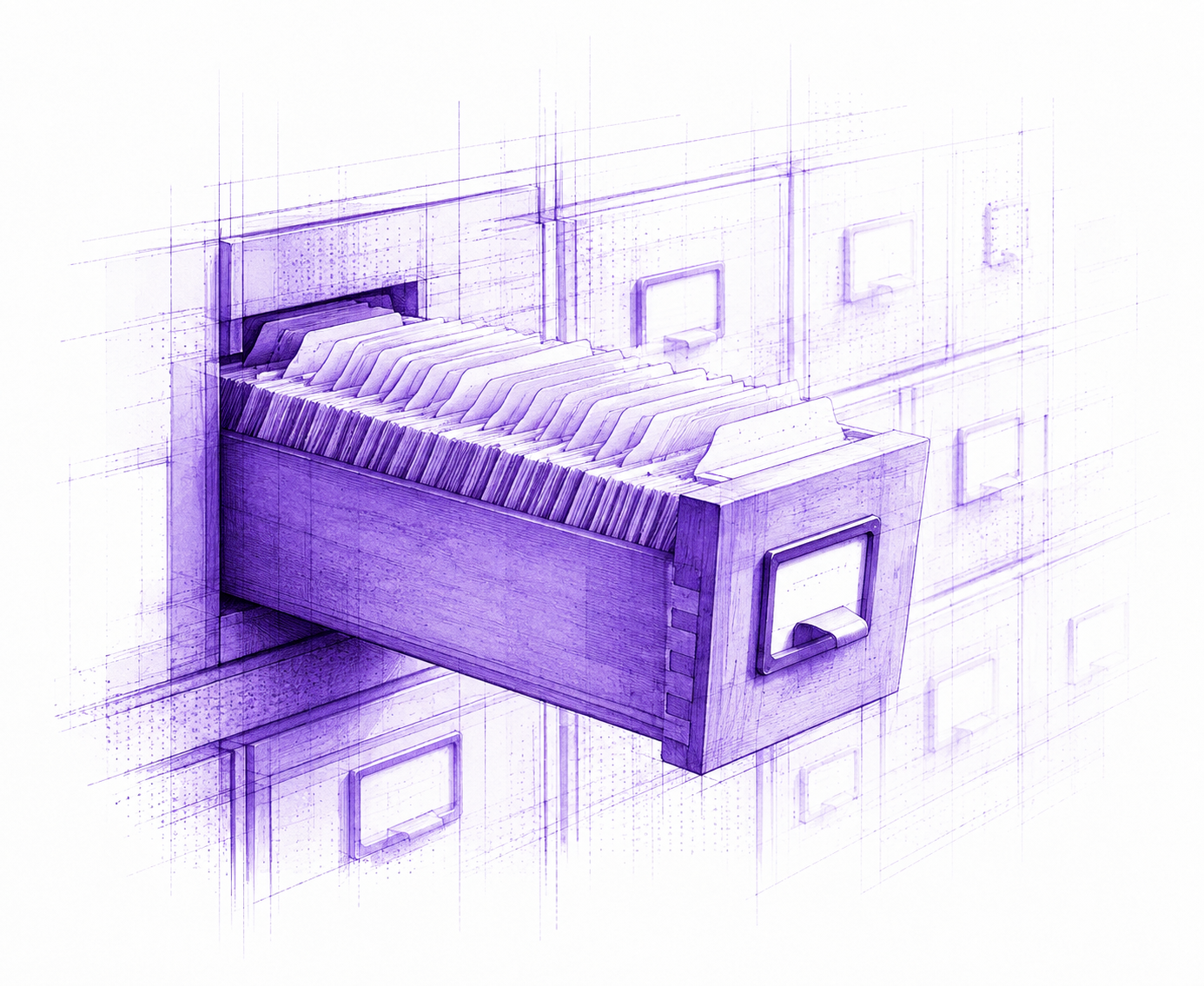
But somebody still has to know which product is sellable in which market, who approved the discount, what version of the policy was live, and whether the invoice was paid. That is state. It needs a history, clear ownership, and a place where another person can find it later.
I expect systems of record, databases, payment processing, identity, and the workflows that join them to matter more as agents get better. The agent needs somewhere authoritative to read from, and somewhere accountable to write to.
Generation is not authority
It is easy to confuse a good answer with a valid change. An AI can write a convincing product description from a spreadsheet. It cannot decide, by fluency alone, whether the product is in stock, whether the claim is approved for the German market, or whether the new copy should replace the published version. Those changes need provenance, permissions, and a trail.
That distinction gets sharper when money enters the room. A payment has a lifecycle: an attempt, an authorization, a capture, perhaps a refund or dispute. This is not implementation detail. It is what finance reconciles, what support investigates, and what a company relies on when something goes wrong. An agent can initiate the work; it should not be the only witness to it.
AI is a capable operator. A system of record is where the operator is told what it may change, and where the change remains after the conversation ends.
The CMS case
The UX of a CMS is among the easiest things to replace. A blank editor, a content form, a media library, a schedule button: an agent can hide most of that behind a request in plain language. Ask for a campaign page, get a draft, then get channel variants. Good. Nobody misses filling twelve fields by hand.
The CMS still needs to keep the content model, publishing status, locale, legal review, author, and version history. It has to answer a dull question without guessing: what was on the site at 09:17 last Tuesday? An agent should propose a new state. The CMS should preserve the state that was accepted.
Where the value moves
SaaS companies should ask a more pointed question than “how do we add AI?” What fact do customers trust us to keep? If the answer is vague, AI may make the product nicer while making the moat thinner. If the answer is precise, AI has somewhere useful to go. It can classify, suggest, route, reconcile, explain, and prepare changes.
I see a bright future for systems of record, especially in heavily regulated markets such as fintech and insurance. These businesses cannot treat correctness as a nice feature. They need traceable decisions, controlled access, durable records, and a way to explain what happened after the fact. That can look slow from the outside. It is also why the work has weight.
The early movers in those markets may have an unusually good position. If they use AI to remove repetitive work while keeping the record, approval path, and audit trail intact, they can become faster without asking customers or regulators to accept a black box. The agent becomes a very capable operator inside a system that can still account for itself.
Some AI-native products will become systems of record by owning a new kind of state. Some existing record systems will lose because their data model is poor or their workflow is hostile. Still, I would bet against businesses handing their cornerstones to a model with no durable memory, no permission boundary, and no ledger of consequence.
The future SaaS stack may have fewer tabs. Underneath it, it will have more records.
— typed on paper-white pixels, corrected twice
Robin Westerlundh